
Local GuidesWater Damage Tips
How to prevent mold after a basement flood in Newport
Mold can start in 24 to 48 hours after a Newport basement flood. Here is the exact order of steps that stops it, from water removal to drying targets.
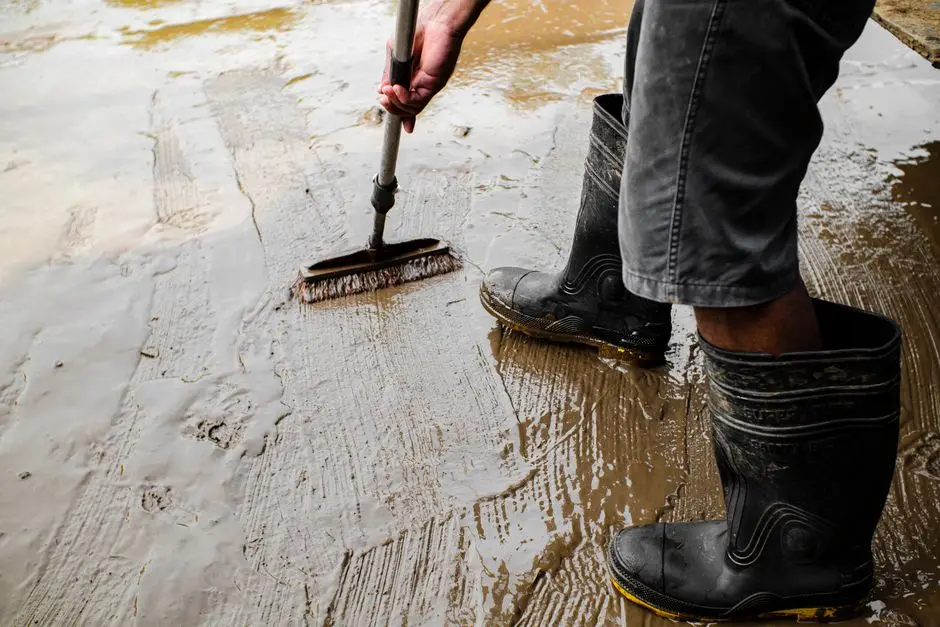
Mold can begin colonizing a wet Newport basement in 24 to 48 hours, so the answer to preventing it is speed plus complete drying: get standing water out within hours, drop the moisture content of framing and drywall below 16%, and hold indoor humidity under 50% until everything reads dry on a meter. If you do those three things, mold almost never gets a foothold. If you skip any one of them, you will usually smell it before you see it.
This guide walks through the exact order of steps we use on basement flood cleanup Newport KY jobs, the numbers that tell you when a basement is actually dry, and the Newport-specific problems that turn a small leak into a mold job.
How fast does mold grow after a basement flood in Newport?
Mold growth after a basement flood in Newport typically starts within 24 to 48 hours, and visible colonies appear in 3 to 7 days when the basement stays above 60% relative humidity and the temperature sits between 68°F and 86°F. Newport basements hit that range most of the year.
The clock does not start when the water recedes. It starts when the water arrives. A basement that took on two inches overnight on a Tuesday is already 10 to 12 hours into the window by the time you find it Wednesday morning. That is why the first call we take on a flooded basement is almost never about the water itself - it is about whether the framing, drywall, and insulation have crossed the 24-hour mark.
Three conditions have to line up for mold to grow:
- Moisture - any surface above roughly 16% moisture content on a pin meter.
- Organic material - drywall paper, wood framing, cardboard, carpet backing, insulation facing.
- Still air and mild temperature - a closed-up basement with no airflow and temps above 65°F.
Take away any one of those and mold stalls. The fastest way to take away all three is to dry the space aggressively and keep air moving until the meters say you are done.
The first 24 hours: what to do before anything else
The first 24 hours after a Newport basement flood decide whether you are looking at a drying job or a mold remediation job. Here is the order that matters.
- Kill the power to the basement at the breaker if water is anywhere near outlets, the panel, or appliances. Do not wade in to flip a switch.
- Find the source and stop it. If it is a sump pump that quit, a failed supply line, or a backed-up floor drain, that changes what happens next.
- Document everything with photos and video before you move a single item. Your insurance adjuster will want timestamps.
- Call your insurance company and open the claim. Most policies cover sudden water damage; almost none cover mold that resulted from neglect.
- Get water out and air moving. This is where most homeowners lose the battle - they mop and point a box fan at the floor and call it done.
If the water came in through a backed-up drain or toilet, treat it as contaminated. That is a different job than a clean supply-line leak, and it needs sewage backup cleanup Newport KY rather than a wet-vac and a shop fan.
Remove the water completely, not just the visible puddles
Standing water is the easy part. The water you cannot see - soaked into carpet padding, behind baseboards, inside wall cavities, under vinyl plank - is what feeds mold for the next two weeks.
On a typical Newport basement flood, here is what actually has to come out:
- Surface water: pumped or extracted within 2 to 4 hours of arrival.
- Carpet and pad: pad almost always goes. Carpet can sometimes be saved with carpet and rug water damage restoration Newport KY if we get to it inside 24 hours.
- Wall cavities: if water wicked up past the baseboard, we drill small weep holes and force air into the cavity. Drywall that soaked above 12 inches usually gets cut out.
- Concrete: concrete holds water. A slab that looks dry on top can read 20%+ moisture two inches down for a week.
A wet/dry shop vac moves about 5 to 10 gallons before you empty it. A truck-mounted extraction unit moves 15 to 25 gallons per minute. That difference is why a basement that took on 400 gallons gets dried in a day by a pro crew and takes a homeowner four days of vacuuming - and four days is long enough for mold to start.
Dry the structure to the right numbers
Drying a basement is not a matter of running a dehumidifier until it feels dry. It is a matter of hitting specific numbers and holding them.
Here are the targets we work to on every job:
- Relative humidity: below 50%, ideally 35% to 45%.
- Wood framing moisture content: below 16%, target 12%.
- Drywall: below 1% on a non-penetrating meter, or under 16% on a pin meter.
- Concrete slab: within 3 to 5 points of an unaffected control area.
- Air movement: enough to feel it at floor level in every corner of the room.
The equipment that gets you there is not a single box-store dehumidifier. A 1,000-square-foot finished basement typically needs 2 to 4 commercial LGR dehumidifiers, 6 to 12 air movers, and 24 to 72 hours of runtime. That is what basement drying and dehumidification Newport KY actually means in practice - equipment sized to the cubic footage, not to the room count.
One more thing: drying only works if the source is fixed. If your sump pump failed and you are drying a basement that will flood again on the next hard rain, you are wasting the runtime. That is a sump pump failure cleanup Newport KY problem first and a drying problem second.
What to remove, what to save, and what to throw away
Every porous item that stays wet past 48 hours becomes a mold reservoir. Here is the honest breakdown.
Almost always remove
- Carpet padding
- Wet drywall below the water line plus 12 inches
- Wet fiberglass or cellulose insulation
- Cardboard boxes and paper storage
- Particleboard furniture and MDF shelving
Often salvageable with fast action
- Solid wood furniture - if dried within 24 to 48 hours
- Hardwood flooring - depends on how long it sat; hardwood floor water damage restoration Newport KY can save some floors that look ruined
- Documents and photos - freeze them if you cannot get to them today
- Appliances - usually a replace, not a repair, if the motor or control board got wet
Always throw away
- Anything that was touched by sewage water
- Drywall with visible dark staining
- Insulation that has been wet more than 24 hours
If you are not sure whether something is worth saving, err on the side of removing it. A $200 bookshelf is not worth a $3,000 mold remediation.
Newport-specific problems that feed mold
Newport basements have a few quirks that make mold prevention harder than it is in newer suburbs. If you live in the 41071 or 41072 ZIP codes, these are the ones we see most.
Older housing stock. A large share of Newport homes were built before 1950, and many have stone or brick foundations with no exterior waterproofing. Those walls wick groundwater continuously. After a flood, they stay damp for weeks unless you actively dry them.
Hillside lots and river-adjacent blocks. Properties on the slopes above the Ohio River, and the low blocks closer to the riverfront, deal with two different problems: hillside runoff on one end and a high water table on the other. Both push water against the foundation from the outside.
Combined storm and sanitary sewers. In older parts of Newport, heavy rain can overwhelm the combined system and back water up through floor drains and laundry standpipes. That is not clean water, and it needs to be treated as contaminated from minute one.
Finished basements with no vapor barrier. A lot of Newport basements were finished in the 1980s and 1990s without a proper vapor barrier under the slab. Moisture migrates up through the concrete year-round, and a flood just accelerates it.
If your basement floods more than once every couple of years, the fix is not more drying equipment. It is basement waterproofing Newport KY - sealing, drainage, and grading that keeps the water outside where it belongs.
Common mistakes that cause mold after a flood
We get called to remediate mold in basements that were "dried" by the homeowner two weeks earlier. Almost every one of those jobs traces back to one of these mistakes.
- Running a fan without a dehumidifier. Air movement alone just spreads moisture around the room. You need to pull the water out of the air, not just move it.
- Trusting your hand instead of a meter. Drywall that feels dry on the surface can read 25% moisture two inches in. Buy a $40 pin meter or borrow one.
- Leaving wet carpet pad in place. Pad is a sponge. It will not dry in place, and it will grow mold under the carpet where you cannot see it.
- Closing the basement door. Closing the door traps humidity. Keep it open and, if the weather allows, crack a window for cross-ventilation.
- Turning off the dehumidifier too early. Two days of drying is not enough for most Newport basements. Plan on 3 to 5 days of continuous runtime.
- Painting over the problem. Kilz and mold-resistant paint do not kill mold. They hide it until it comes back through the paint.
- Skipping the wall cavities. Water wicks up inside walls. If you do not dry or open those cavities, mold grows behind the drywall where you will not notice until you smell it.
One more: do not run a gasoline-powered generator or pressure washer inside the basement to power equipment. Carbon monoxide kills people in basements every year after floods. Run cords from outside or use battery equipment.
When to call a professional
Call a professional when any of these are true: the water is more than an inch deep, the flood involved sewage or groundwater, the basement is finished, the wet area is over 100 square feet, or more than 24 hours have passed since the water arrived.
Those are not upsell triggers. They are the conditions where homeowner-grade equipment cannot physically dry the space fast enough to beat the mold clock. A box fan and a $200 dehumidifier cannot pull 400 gallons of water out of a 900-square-foot finished basement in 48 hours. Commercial LGR units and a properly sized air mover layout can.
Newport Basement Flood Pros handles this exact job across Newport and the surrounding Northern Kentucky river towns. We extract the water, set drying equipment, monitor moisture daily, and tell you honestly whether you are looking at a dry-out or a mold remediation. If it is mold, we handle that too - including mold remediation Newport KY and post-remediation verification so you know the problem is actually gone.
If you want a second opinion on whether your basement is dry enough, we will bring a meter and show you the readings. No charge for the look.
Frequently Asked Questions
How do I prevent mold after a basement flood in Newport KY?
Get standing water out within 4 hours, set commercial dehumidifiers and air movers within 24 hours, and keep drying until wood framing reads below 16% moisture and indoor humidity stays under 50%. Remove wet carpet pad, wet insulation, and any drywall that soaked above 12 inches. Most Newport basements need 3 to 5 days of continuous drying.
How long does it take for mold to grow after a basement flood in Newport?
Mold can start colonizing in 24 to 48 hours and becomes visible in 3 to 7 days. Newport basement temperatures sit in the 68°F to 86°F range most of the year, which is prime mold territory. The clock starts when water arrives, not when you find it.
Can I prevent mold without professional help in Newport?
Yes, if the flood was clean water, under an inch deep, in an unfinished basement under 100 square feet, and you start within a few hours. Rent a commercial dehumidifier and at least four air movers, buy a pin moisture meter, and dry for 3 to 5 days. Anything bigger, or any sewage involvement, needs a pro crew.
What should I do first to prevent mold after a basement flood in Newport?
Cut power to the basement at the breaker, then get the water out. Every hour of standing water adds roughly a day of drying time and pushes you closer to the 24-hour mold window. After extraction, set dehumidification and air movement immediately - do not wait for the insurance adjuster to visit.
Does drying prevent mold after a basement flood in Newport?
Drying prevents mold only if it is complete. Surface-dry is not dry. Wood framing needs to read below 16% on a pin meter, drywall below 1% on a non-penetrating meter, and indoor humidity under 50%. Partial drying leaves pockets of moisture that mold finds within a week.
Get help with Basement Flood Cleanup in Newport
If your Newport basement is wet right now, the clock is running. We extract water, set drying equipment, monitor moisture daily, and handle mold remediation if it comes to that - all under one crew.
Call Newport Basement Flood Pros at +18598328132 and we will tell you on the phone whether you are looking at a dry-out or something bigger.